Kandy is a city of movement and meaning: a lake at its centre, hills rising around it, daily worship at its heart and a lively rhythm that feels distinctly different from both the coast and the ancient cities.
UNESCO calls Kandy the last capital of the Sinhala kings and highlights its role as the home of the Temple of the Tooth Relic. Sri Lanka Tourism describes the temple, royal complex and Kandy Lake as a remarkable expression of Sri Lankan architecture and tradition. For travellers, Kandy is most rewarding when it is not reduced to one quick temple visit—give it enough time for a quiet lakeside walk, a garden morning and a measured introduction to Kandyan culture.
Why Kandy belongs on the route
Kandy provides a natural bridge between Sri Lanka's Cultural Triangle and the cool highlands. It is a practical overnight stop, but it is much more than a transfer point. Here, sacred ritual, royal history, traditional arts and urban life meet within a dramatic hill setting.
The city can feel busy, particularly around worship times and festivals, so a spacious plan is useful. Choose a central stay if you want easy access to the lake and temple complex, or a quieter hillside base if rest and views are the priority.
Visit the Temple of the Sacred Tooth Relic with care
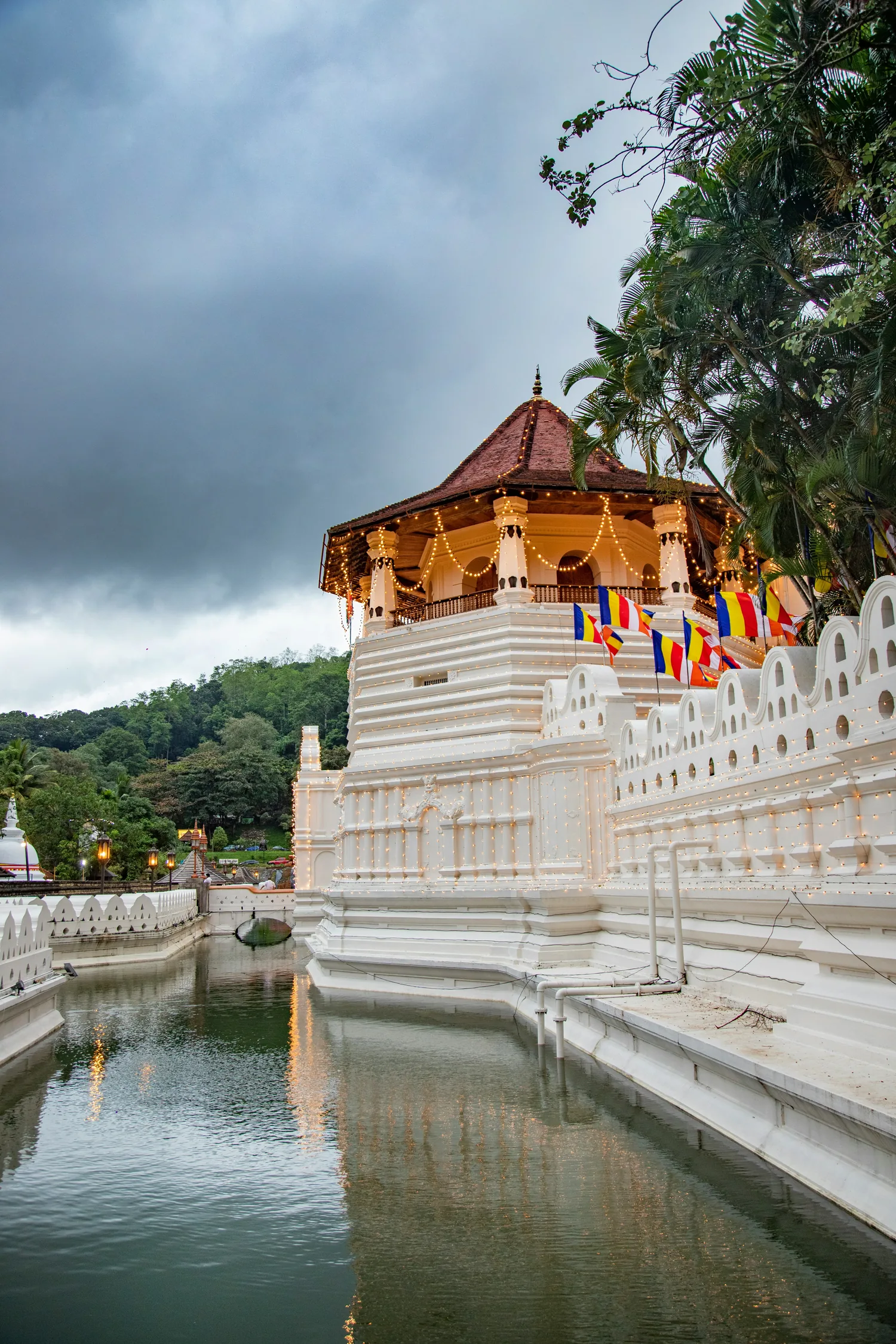
The Temple of the Sacred Tooth Relic—Sri Dalada Maligawa—is one of Sri Lanka's most important Buddhist pilgrimage places. It stands within the former royal palace complex beside Kandy Lake. The experience is as much about observing a living sacred space as seeing historic architecture.
Wear clothing that covers shoulders and knees, remove footwear when directed and follow the current rules on bags and photography. During worship or special observances, expect greater crowds and allow extra time. Do not treat worshippers, offerings or religious rituals as a backdrop for staged photographs. If you are unsure where to stand or what to do, simply ask a member of staff or follow the rhythm of local visitors.
Walk the lake, then slow the day down
Kandy Lake offers a gentler perspective after the energy of the centre. Walk a section at an unhurried pace, notice the surrounding hills and let the lake connect the temple complex to the wider city. Morning or later afternoon is usually more comfortable than the middle of the day.
Keep the rest of the day deliberately light: a local lunch, a traditional arts performance where it feels appropriate, a small craft stop or time at your hotel. Kandy becomes far more enjoyable when you resist trying to fit every sight into one afternoon.
Make room for Peradeniya
The Royal Botanic Gardens at Peradeniya are a strong contrast to the compact city centre. They offer space, shade and a slower change of scenery, particularly useful for families or travellers who have had several full sightseeing days. Check current opening arrangements and transport time locally before setting out.
You can choose between a temple-focused city day and a garden-focused half day, or combine both across two nights. The best balance depends on your pace, weather and whether you are preparing for the onward train journey.
Festivals and living tradition
Kandy Esala Perahera is one of Sri Lanka's most significant annual cultural events, bringing processions, music and ceremony into the city. Its dates, access arrangements and local traffic conditions vary, so confirm current details through official and local sources before booking travel around it.
At any festival, remember that devotion comes before spectacle. Follow directions from organisers and staff, choose viewing places that do not obstruct local participants and be patient with crowds, road changes and altered business hours. Our Sri Lanka festivals guide offers more context for planning around the island's celebrations.
How long to stay in Kandy
- One night: enough for a compact temple visit and a lakeside walk if your route is tight.
- Two nights: the best balance for most travellers, adding Peradeniya or a slower cultural activity.
- Three nights: suits travellers who enjoy gardens, wellness, traditional arts or a deeper rest before the highlands.
Leave enough margin around arrival and departure. Hill-country roads can be slower than expected, and the train onward is much more enjoyable when you have not had to race through the city first.
Continue to Ella by rail
For many travellers, Kandy is the beginning of Sri Lanka's most scenic rail chapter. The journey toward Ella moves into tea country, with the landscape changing steadily beyond the city. Read our Kandy to Ella train guide for booking considerations, route choices and realistic planning.
If you are staying in the hills after the train, our Ella guide helps turn the arrival into a properly paced stay rather than another rushed stop.
Kandy travel FAQs
Is Kandy worth visiting?
Yes. Its sacred temple, royal history, lake, gardens and connection to the highlands make it one of Sri Lanka's essential cultural stops.
How many days should I spend in Kandy?
Two nights is ideal for most travellers. It gives time for the Temple of the Tooth, a relaxed walk and either Peradeniya or another cultural experience.
What should I wear to the Temple of the Tooth?
Wear modest clothing that covers shoulders and knees, choose easy-off footwear and follow the temple's current instructions on bags, photography and worship periods.
Plan the hill country
Let Kandy set the cultural tone for your journey.
Eeily Travels can shape a Sri Lanka route around sacred places, the highlands and the right pace for each.
Request a Quote