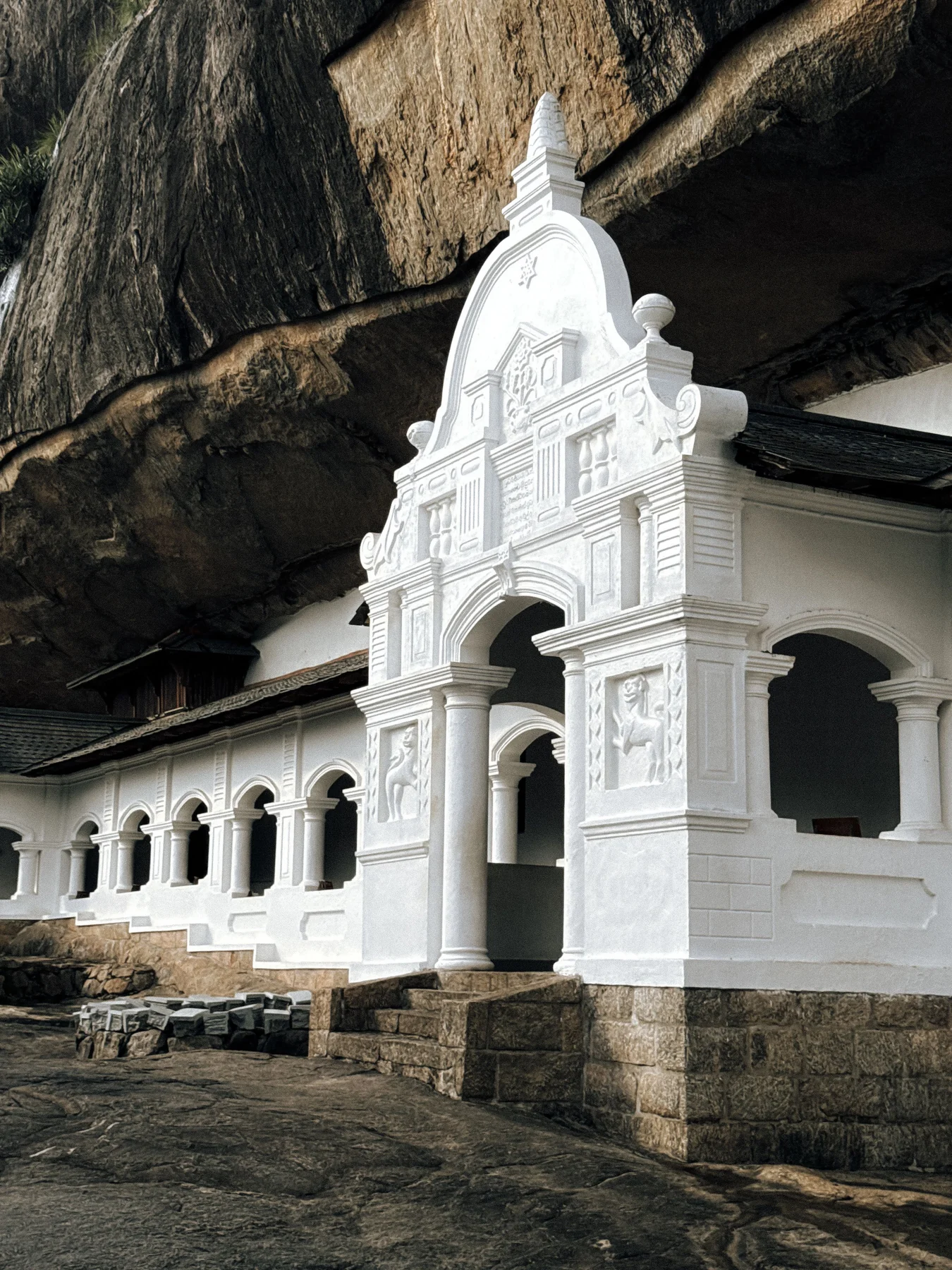
Dambulla Cave Temple feels different from the moment the climb begins. Above the plain, a series of cave shrines opens into a sacred interior of painted ceilings, quiet figures and centuries of continuous worship.
Known formally as the Rangiri Dambulla Cave Temple, this living Buddhist pilgrimage site has five cave sanctuaries. UNESCO describes it as Sri Lanka's largest and best-preserved cave-temple complex, celebrated for its mural paintings and 157 statues. It is not a place to rush through for a single photograph; it rewards a slower, respectful look at the art, the rituals and the mountain setting.
Why Dambulla matters
The cave monastery has been a place of Buddhist practice and pilgrimage for more than two millennia. UNESCO notes that forest-dwelling monks inhabited the natural caves from the 3rd century BCE, and that the shrines have been developed and renewed across many historical periods.
That continuity is what makes Dambulla special. The cave interiors are not a museum display detached from life. They remain sacred spaces where art, architecture and religious practice belong together. Enter with patience, lower your voice and leave time to notice the painted surfaces rather than hurrying from one cave to the next.
Plan the climb comfortably
Reaching the rock temple involves a steady climb on steps and sloping paths. Sri Lanka Tourism recommends doing it in the morning or evening rather than the hottest part of the day. Start with water, sun protection and footwear that is stable but easy to remove. Take the ascent at your own pace—there is no reason to turn a heritage visit into a fitness test.
If you are travelling with young children, older relatives or anyone sensitive to heat, build in pauses and arrange your onward transfer with enough time. A calm arrival makes the shrines much more enjoyable.
Inside the five cave shrines
The five shrines hold a rich collection of Buddha images, other religious figures and wall and ceiling paintings. You do not need to memorise every name or date before you enter. Instead, pay attention to how the spaces change: from smaller, intimate caves to grander interiors where figures and murals create an enveloping sense of place.
Allow your guide—or the site's interpretation—to provide context where useful, but leave space for quiet observation. Photographs rarely capture the scale of the painted ceilings or the atmosphere of a sacred room.
Dress and behave with respect
- Cover shoulders and knees: modest dress is essential at this active religious site.
- Remove footwear when requested: choose shoes or sandals that are easy to take off; socks can help on warm stone.
- Keep voices low: visitors share the caves with worshippers and pilgrims.
- Follow photography rules: ask if unsure, never use flash where prohibited and do not pose with your back to Buddha images.
- Do not touch murals or statues: the cave art is precious and sensitive to wear.
These choices protect the temple's spiritual atmosphere and its fragile art. For more guidance across the island, read our responsible travel in Sri Lanka guide.
How much time do you need?
Set aside two to three hours for the climb, the caves and a rest. This allows you to move at a respectful pace and adapt if the site is busy or the temperature is high. Dambulla can work as a half-day stop within a Cultural Triangle route, but it is more enjoyable when you do not stack it against another major sight without a break.
Check the current opening arrangements, ticket information and any photography restrictions locally before travel. Conditions, visitor management and access can change, especially around religious observances or conservation work.
Build Dambulla into the Cultural Triangle
Dambulla sits naturally between the great heritage landscapes of the Cultural Triangle. Pair it with Sigiriya on separate, unhurried days, then continue to the wider ancient cities through our Polonnaruwa guide or Anuradhapura guide.
For a compact first route, our 7-day Sri Lanka itinerary helps you see how the regions can flow. The key is not fitting every landmark into one day; it is allowing each sacred place its own pace.
Dambulla Cave Temple FAQs
Is Dambulla Cave Temple worth visiting?
Yes. Its five cave shrines, remarkable murals and living Buddhist significance make it one of Sri Lanka's most rewarding Cultural Triangle experiences.
What should I wear to Dambulla Cave Temple?
Wear modest clothing that covers shoulders and knees. Bring easy-off footwear and follow all site instructions about removing shoes, hats and photography.
How long does a Dambulla visit take?
Plan two to three relaxed hours, including the climb and time in the caves. Go early or later in the day for more comfortable temperatures.
Plan the Cultural Triangle
Let Sri Lanka's sacred places set the pace.
Eeily Travels can shape a heritage route around your interests, comfort and the season.
Request a Quote