Cycling changes the scale of a journey. You notice the small details between the headline sights: a roadside fruit stall, the sound of birds in early light, a change from dry-zone heat to highland cool. Sri Lanka can be a rewarding place to ride, but it is not a destination to approach with a one-size-fits-all route. Weather, road conditions, elevation and traffic should shape the plan from the beginning.
The short answer
Build a Sri Lanka cycling holiday around your confidence, not the longest distance you can imagine. Choose shorter routes in the heat, use a local guide or support vehicle for unfamiliar terrain, start early and keep rest days in the itinerary. The goal is to arrive curious and comfortable—not exhausted before the next part of the trip.
Choose the right type of route
Cultural landscapes and rural lanes
The Cultural Triangle and surrounding countryside can be a rewarding setting for shorter daytime rides, especially when combined with ancient cities, village scenery and a comfortable hotel base. Use a local guide who can select suitable roads for the day rather than following a generic map route. Our UNESCO World Heritage Sites guide can help shape the cultural stops around the ride.
Coastal riding
Coastal areas can work well for gentler rides when planned around heat, wind and local traffic. Start early, carry plenty of water and avoid the temptation to push on during the hottest part of the day. A beach stay after a ride can be a lovely balance; see our Bentota guide or Arugam Bay guide for ideas.
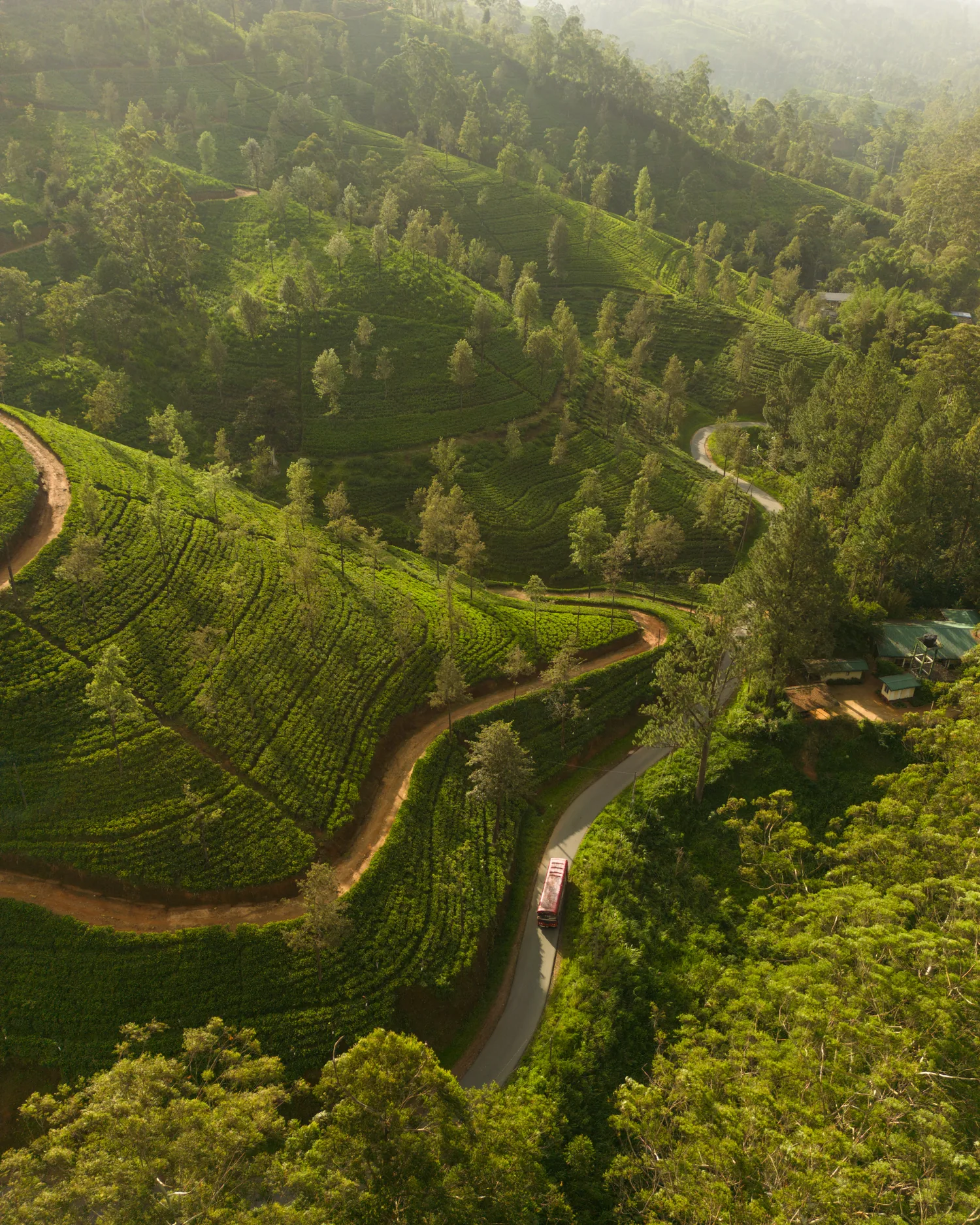
Tea country and the hills
The central highlands offer dramatic views, but also serious gradients and variable weather. These routes suit confident riders with an appropriate bike, realistic daily distances and support available when needed. Read our tea country guide before you add hill-country cycling to the wider itinerary.
Northern and eastern landscapes
Quieter regions can be a rewarding contrast for travellers who enjoy open roads, local culture and a more spacious rhythm. Use a guide who knows the area, check current conditions and let the route be shaped by the day rather than by an ambitious mileage target.
Why a support vehicle can transform the trip
A support vehicle is not an admission of defeat. It gives your group options: luggage can travel separately, a rider can sit out part of a day, and a change in weather or energy does not derail the whole holiday. It is particularly helpful for families, mixed-ability groups, longer rides and routes that link very different elevations.
- Confirm how many people and bikes the vehicle can carry.
- Ask what happens in the event of a puncture, mechanical problem or sudden weather change.
- Agree where the driver will meet the group and how you will communicate during the ride.
- Keep water, a first-aid kit and essential layers accessible, not buried in luggage.
For the road connections around the cycling days, our private driver guide has useful planning advice.
Ride safely and read the road
Road conditions and traffic can change quickly. Wear a helmet, make yourself visible, ride predictably and do not assume other road users have seen you. Avoid riding after dark or in poor visibility, and never treat a driver’s schedule as a reason to hurry.
- Use a well-maintained bike with working brakes, tyres and lights where needed.
- Keep left where appropriate and follow the guidance of your local cycling leader.
- Leave extra space around buses, trucks, tuk-tuks, animals and pedestrians.
- Take regular water and shade breaks; heat and humidity can build quickly.
- Stop early if you feel unwell, dehydrated or uncertain about conditions.
Plan around weather and energy
Early starts are often more comfortable, particularly in warmer regions. Hill-country rides can bring rain, mist and cooler temperatures, while coastal and dry-zone rides demand good sun protection and hydration. Check the current forecast locally and keep a flexible alternative for days when conditions are unsuitable.
Our best time to visit Sri Lanka guide can help you choose regions that suit your travel dates, but always rely on current local advice for the day’s riding conditions.
What to pack
- A properly fitted helmet and any personal cycling gear you rely on.
- Lightweight, breathable clothing, plus a rain layer and a warm layer for the hills.
- Sun protection, sunglasses and a refillable water bottle.
- Padded shorts, gloves or cycling shoes if they make you more comfortable.
- A small day bag with a phone, identification, basic first-aid supplies and snacks.
- A dry bag or cover for electronics in case of rain.
Confirm what is provided by the operator before you travel. For the rest of your trip, our Sri Lanka packing list covers practical items for moving between regions.
Cycle with respect
On a bicycle, you are more visible and more connected to everyday life. Ride gently through villages, give people and animals plenty of room, ask before making photographs and do not block narrow lanes. Buy a drink or snack locally when it feels right, use refill points where available and leave no litter behind.
Small, considerate choices make cycling feel less like passing through and more like being welcomed into the landscape.
Frequently asked questions
Is Sri Lanka good for cycling?
It can be very rewarding, with rural lanes, cultural landscapes, coast and highlands in a compact island. Choose the route around weather, traffic, terrain and your confidence.
Do I need a support vehicle?
A support vehicle is sensible for multi-day routes, mixed-ability groups, hotter conditions and longer climbs. It provides flexibility for luggage, weather changes and mechanical issues.
Can beginners cycle in Sri Lanka?
Yes, with a tailored route. Choose shorter daytime rides, a good bike, local guidance and a support option rather than treating the trip as an endurance challenge.
What should I pack?
Bring a helmet, comfortable cycling clothing, sun and rain protection, water and supportive shoes. Confirm what equipment the operator provides before travelling.
Explore at your own pace
Plan a Sri Lanka cycling journey that feels good from day one
Eeily Travels can shape a route with the right ride lengths, comfortable stays and flexible support for your group.
Request a quote