Udawalawe is often chosen for elephants, but the best safari is bigger than one sighting. It is the low rumble of a jeep along a dusty track, the broad reservoir light, waterbirds at the marsh edge and the privilege of seeing wild animals decide their own distance.
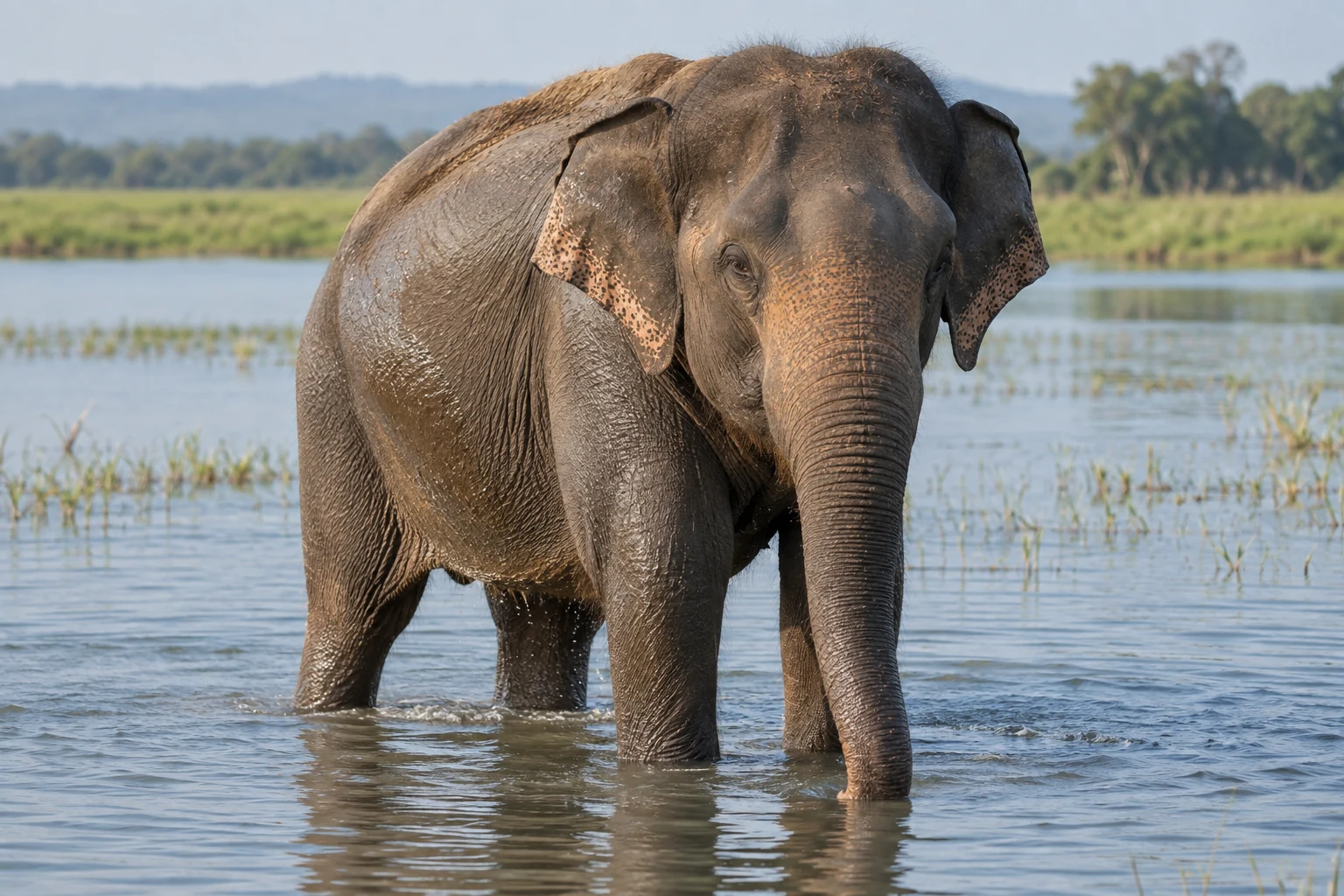
Set in Sri Lanka's south-central region, Udawalawe National Park brings together the Udawalawe Reservoir, riverine areas, marshes, forest and grassland. Sri Lanka Tourism highlights this variety as the foundation of the park's rich flora and fauna. Elephants are a major reason to visit, yet the lasting value is learning to look patiently at the whole ecosystem.
Why choose Udawalawe?
Udawalawe can be a good wildlife choice for travellers who want to focus on elephants within a landscape of open habitat and water. It works naturally between the hill country and the southern coast, and can be shaped as a single overnight stop or a slower two-night wildlife pause.
Choose it for the chance to observe elephants behaving as wild animals—feeding, moving, resting or passing through—not for a promise of closeness. Every encounter should remain on the animals' terms.
What you may see
Elephants draw most attention, but water buffalo, deer, monkeys, crocodiles, birds and smaller species can make a safari equally memorable. Sri Lanka Tourism records an impressive mix of birds, mammals, reptiles, fish and amphibians in the park. Bring binoculars if you have them, and tell your guide if birds, landscapes or photography matter as much to you as elephants.
Wildlife is never guaranteed. If an elephant remains distant or chooses to move away, that is a good outcome: it means the animal retains control over its space. Let a skilled driver read the landscape rather than asking them to chase every report of an animal.
Choose a jeep experience with care
The quality of a safari is shaped by the driver, tracker and the choices guests make inside the vehicle. Before you book, ask how many people share the jeep, how the operator approaches animals and what happens when a sighting becomes crowded. The right answer favours calm observation over the closest possible image.
- Keep a respectful distance: never encourage a driver to cut off, surround or follow an animal closely.
- Stay quiet: softer voices and fewer sudden movements create a better experience for everyone.
- Remain in the vehicle: follow all ranger and crew instructions at every time.
- Never feed wildlife: food changes animal behaviour and creates harm.
- Leave no litter: keep every bottle, wrapper and tissue with you until it can be disposed of properly.
For broader principles, see our responsible travel in Sri Lanka guide.
Permits, timing and access
Udawalawe is a national park administered through Sri Lanka's Department of Wildlife Conservation. Visitors enter under permit conditions. The department provides day-visitor eServices, but practical arrangements, access and availability can change; confirm the current process with the official DWC information, your hotel or a reputable safari operator before travelling.
Morning and later-day safaris are popular because temperatures can be more comfortable and animal activity may vary. Do not treat this as a guarantee: season, rainfall, weather and the animals' own movements shape every drive. Build a little margin into the schedule instead of planning a tight onward transfer immediately after the safari.
How long to stay
- One night: works for a single carefully planned safari and a relaxed arrival or departure.
- Two nights: adds room for a second safari, rest and flexibility around weather or permits.
- Longer: suits dedicated wildlife travellers who enjoy birding, photography and patient observation.
It is usually better to do one unhurried safari than try to pack a park entry between long road journeys. The wildlife experience should be the centre of the day, not a rushed add-on.
Udawalawe or Yala?
Both parks reward respectful travellers, but they suit different priorities. Udawalawe is a compelling choice when elephants and open wildlife landscapes are the main interest. Yala is often chosen by travellers hoping for a wider big-wildlife safari that includes the possibility of leopard sightings. Neither park should be judged by a single animal.
Read our Yala safari guide for its landscape, wildlife ethics and route-planning perspective. Choose the park that best matches your route, preferred pace and the current local advice—not a fixed promise of what you will see.
What to take on safari
- Sun protection: hat, sunscreen and sunglasses matter in an open vehicle.
- Water: bring a refillable bottle if practical, especially in warm conditions.
- Light layer: early starts and vehicle movement can feel cooler than expected.
- Binoculars: they make distant birds and wildlife much more rewarding.
- Patience: the most important thing you can bring.
For the wider journey, use our Sri Lanka packing list.
Udawalawe safari FAQs
Is Udawalawe good for seeing wild elephants?
Yes. It is one of Sri Lanka's most recognised elephant habitats, but every encounter remains wild and unpredictable. The goal should be respectful observation, not a guaranteed close sighting.
How many safaris should I do in Udawalawe?
One is enough for many visitors. Two can be worthwhile if wildlife is a priority, as they add patience and room to enjoy birds, landscapes and different conditions.
Do I need a permit for Udawalawe National Park?
Yes. Entry is permit-based. Check the Department of Wildlife Conservation's latest guidance or confirm arrangements with a reputable local operator before travel.
Plan wild Sri Lanka
Make room for wildlife to stay wild.
Eeily Travels can shape a Sri Lanka route around respectful safaris, the coast and the pace that feels right for you.
Request a Quote