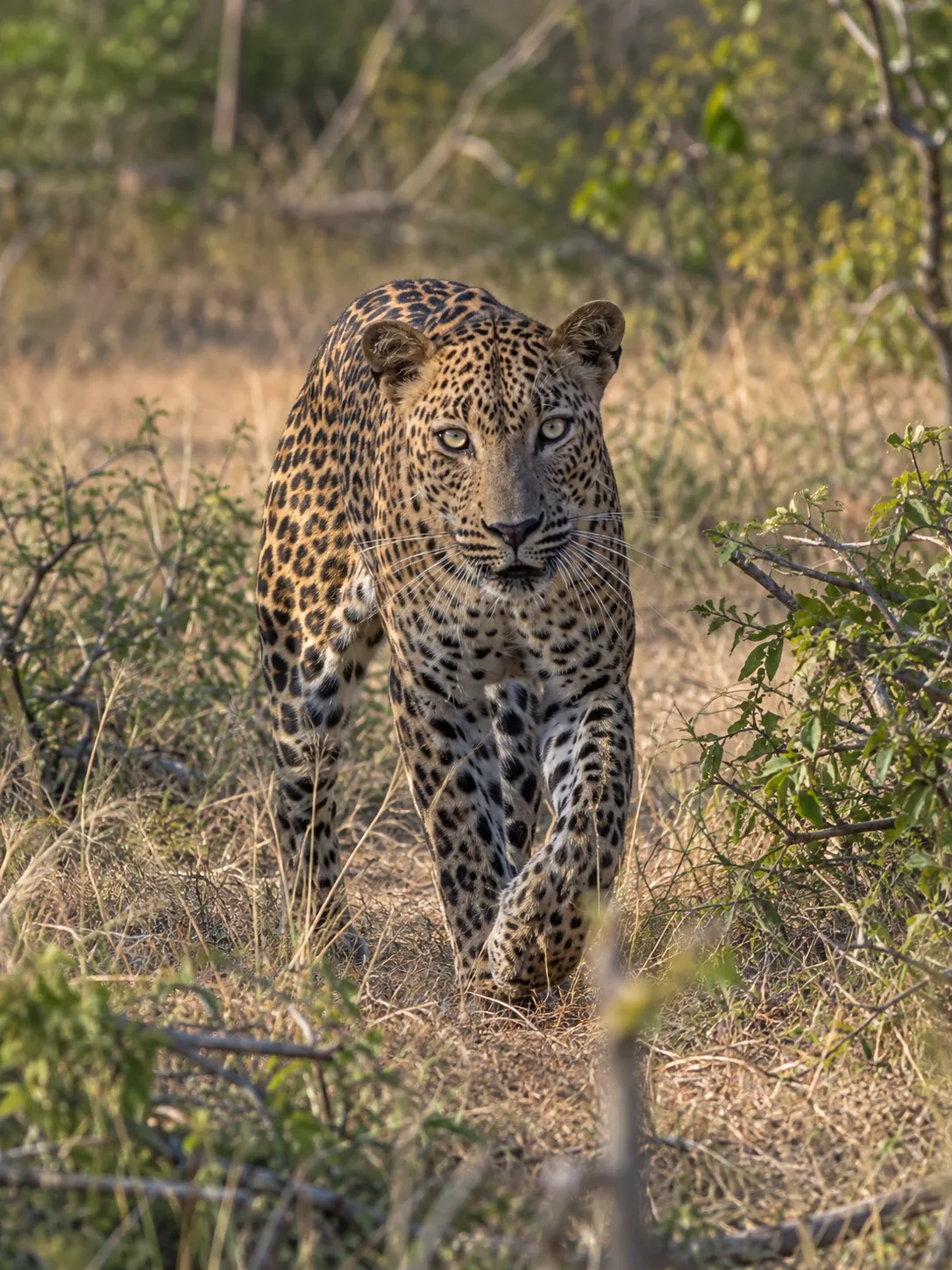
A Yala safari is at its best when it is not a race for a leopard. The real reward is the slow scanning: an elephant shifting through scrub, a bird call from a wetland, a flash of movement in the trees and the vast, dry landscape between sightings.
Yala National Park lies in Sri Lanka's southeast and is one of the country's best-known wildlife destinations. Sri Lanka Tourism describes it as a varied landscape of forest and wetlands, with 44 recorded mammal species and 215 bird species, including six endemic species. It is widely associated with leopards, elephants, sloth bears and birdlife—but nature does not perform on cue. Go with curiosity, and every part of the safari becomes worthwhile.
Why choose Yala?
Yala combines wildlife, open landscapes, waterholes and a strong sense of distance from the busier parts of a Sri Lanka journey. It can work particularly well after the hill country or before the southern coast. The park is also close to places with cultural significance, including Sithulpahuwa and Magul Vihara, so a thoughtful route can balance wildlife with heritage and rest.
Its popularity is a reason to plan carefully. A skilled driver and tracker can read the road, but the quality of the experience also comes from your choices: travelling patiently, respecting every animal's space and being content with what the day reveals.
Set the right expectations
Leopards are the animal many visitors hope to see, and Yala is renowned for its leopard population. Yet a sighting is never guaranteed, nor should it be the sole measure of a good safari. Elephants, deer, wild boar, crocodiles, monkeys, peacocks, raptors and small creatures are all part of the story. Watching a driver slow down for an unfamiliar sound can be as memorable as the headline sighting.
Tell your guide what interests you. Birdwatchers, photographers, families and first-time safari travellers may each prefer a different pace. The right conversation at the start makes it easier to avoid the temptation to rush toward every radio call.
Choose a responsible jeep experience
Before booking, ask simple questions: How many guests will be in the vehicle? Does the operator respect park rules and animal space? Will the driver move on if a sighting becomes crowded? A good answer prioritises safety, quiet observation and the park's regulations over getting the closest possible photograph.
- Keep voices low: sound carries in an open jeep and quiet guests see more.
- Never ask a driver to crowd wildlife: distance protects both animals and people.
- Stay in the vehicle unless staff say otherwise: park instructions are there for a reason.
- Do not feed, call to or throw anything at animals: wildlife must stay wild.
- Leave no trace: keep every wrapper, bottle and tissue in the jeep until it can be disposed of responsibly.
For more principles that travel well across the island, read our responsible travel in Sri Lanka guide.
When to go and how many safaris to take
Park access, conditions and wildlife behaviour vary with rainfall, heat and local management decisions. Sri Lanka Tourism describes Yala as a dry, semi-arid region, but weather still shapes every visit. Check the latest park status and local conditions with your accommodation or a reputable operator before finalising a non-refundable plan.
One safari can be a strong introduction on a compact route. Two give you more time and less pressure: perhaps one focused on open habitat and another on birds or the quieter details. Rather than choosing by a fixed rule, decide how much of your Sri Lanka holiday you want to devote to wildlife.
Where to stay and how to route it
Most travellers use Tissamaharama or the park-area lodges as a base, depending on their budget and preferred atmosphere. Ask your accommodation how transfers, early starts and the relevant park entrance work for the particular safari you are booking. Roads and timings can be slower than map estimates suggest, so leave room around your arrival and departure days.
Yala often fits naturally after Ella or before a southern-coast stay. If your route continues toward historic coastlines, our Galle Fort guide helps plan the next change of scenery.
What to take on safari
- Sun protection: a hat, sunscreen and sunglasses matter in an open vehicle.
- Light layers: conditions can feel cooler in the moving jeep and warmer once the sun is high.
- Water: bring enough for every guest and avoid single-use plastic where possible.
- Binoculars: useful for birds and distant animals; a phone camera is enough for many travellers.
- Patience: it is the most valuable thing to bring.
For the rest of your case, see our Sri Lanka packing list. It includes the useful basics for varied climates, beaches, temples and the highlands.
Yala safari FAQs
Is Yala worth visiting?
Yes, if you enjoy wild landscapes and understand that wildlife viewing is unpredictable. It is a compelling part of a wider Sri Lanka route, especially when planned with time, care and realistic expectations.
How many safaris should I do in Yala?
One is enough for many short itineraries. Two can be worthwhile if wildlife is a priority, as they provide more time without turning one drive into a high-pressure search for a single animal.
What should I wear on a Yala safari?
Choose light, comfortable clothing in subdued colours, secure footwear, sun protection and a light layer. Bring water and keep all litter with you.
Plan wild Sri Lanka
Make your safari part of a balanced journey.
Eeily Travels can shape a Sri Lanka route with the right pace for wildlife, culture, coast and rest.
Request a Quote